
Grails and knights and the Serpents
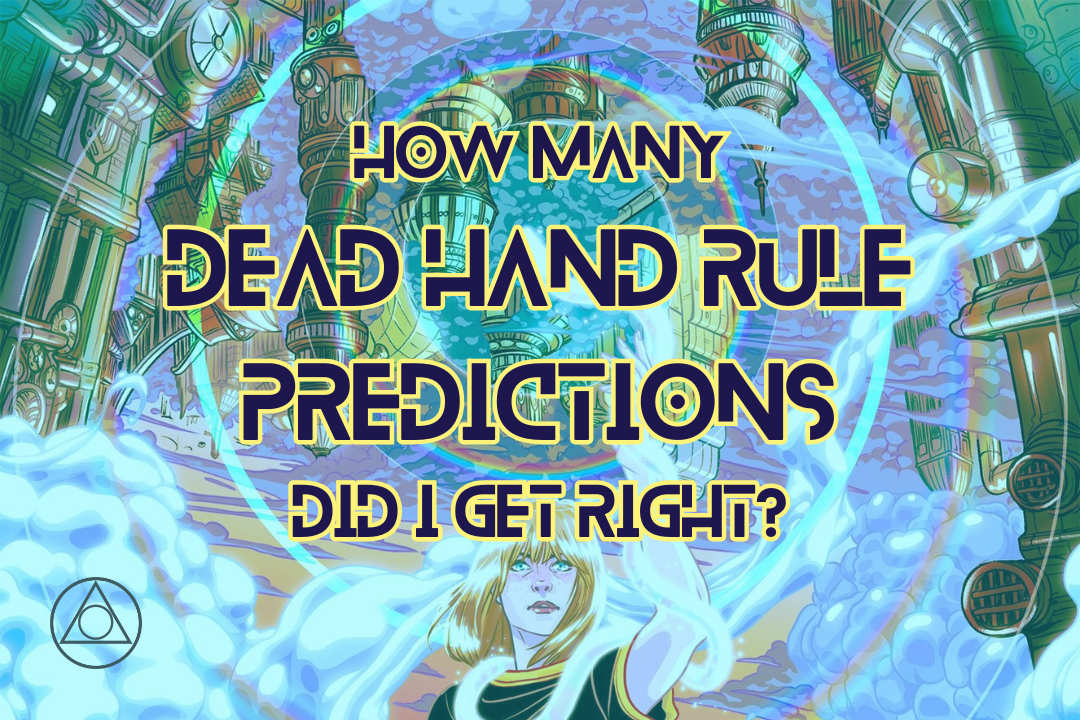
Caleb Altemoc, of unusual skazzerai-beating powers, ends Dead Hand Rule falling into unconsciousness in the arms of Clarity, our creepy culty vampire. Clarity has made some ominous remarks to both him and Mal regarding their future in the vampires’ plan, and thus the finale of the Craft Wars series.
“The Serpents who made you twin grails to bear offering flame.
When the sun goes out, and when you call them their blood will be the wine of rapture.
You and he are the cups of life, preparers of the way.”
This feels important. However, as yet, I don’t think we have quite enough material to make a fully fledged speculative essay or theory. This essay is more exploratory, looking at the concept of grails both in our world and the Craft Sequence, and trying to pull together several ideas and characters that may be involved in this particular plot.
Spoilers for the Craft Wars series so far, naturally.
Setting the scene
To set the scene a little, we’re going to look at Craft Sequence references to grails and a little about grails in our broader culture.
Other than Clarity describing Caleb and Mal as grails, we have only five references to grails across all nine books in the series. Three are directly tied to Camlaan; one is part of a list of items in the Temple of Justice’s evidence locker; and the final one talks about lost grails as a long-shot solution for Tara to defend Seril.
This is not, then, an example of a long-held concept in the series finally building to something (like my earlier pre-Craft Wars essays about the skazzerai and Grimwalds were). No, this is a new, albeit fitting, concept in the series.
So, let’s look at grails in the real world then. Or, really, a single grail: the Holy Grail.
I imagine most readers are familiar with the concept given the ubiquity of Arthurian legends in modern English-language fantasy - and, hell, Indiana Jones’ third outing. I’m going to tell you a bit about it anyway. I have not personally read any of the original sources, nor searched out the citations for accuracy, so take all of this with a grain of salt.
The modern cultural concept of the Holy Grail is a chalice from the Last Supper that held some of Jesus’ blood after the crucifixion, brought to Britain by Joseph of Aramathia, then hidden. It becomes the subject of many quests in Arthurian legend, and it said to have nebulous powers related to healing and immortality.
The first references to a grail in legend come from Old French texts in the 1100s, though it does not yet hold its significance to the Last Supper nor is it definitively a cup or chalice. The word ‘graal’ appears to be some kind of serving dish at first, before becoming a cup; when it becomes the object of quests, it is also at times a jewel. Some early sources appear to have connected the grail to the fall of angels, to mystical visions, and to punishing infidels, but it fairly quickly becomes solidified as a cup related to Jesus.
Otherwise, the most significant part of the mythos around the grail appears to be grail quests. A number of Knights of the Round Table are associated with questing for the grail, which often involves a grail castle and a grail maiden. Only the most knightly of the knights could possibly attain the grail. Galahad and Perceval seem in my minimal reading to the most common knights to quest for the grail, but I have also seen a handful mentioning Gawain (hey Gav), and also Elaine uses it to heal people (hey Elayne).
It is very definitively part of Celtic traditions, and potentially a Christianised interpretation of an old Celtic brewing cauldron myth, which is a fun and witchy connection too.
The details aren’t especially important for my purposes here, particularly as I imagine Gladstone uses the word grail based on general cultural understanding of the term rather than following a specific legend or academic interpretation, but it’s fun to run through.
Let’s go back to the references in the Craft Sequence so far - specifically the ones connecting grails to Camlaan.
“Water in the desert.”
“A glorious gift,” Temoc said.
She lifted the cup two-handed as a Camlaander knight might lift his grail, and drank, eyes closed.”
“Raymet had never visited Camlaan, and she loathed the Camlaander expat community in Agdel Lex, bunch of priggish drunken isolates, most of whom worked in necromantic geology for the big drilling Concerns south of the Wastes. Their homeland was a barbaric mess of stereotype and myth: undead queens, land-bonding, fertility rituals of the bloodier sort, sickles, wicker, and flame, grails and other theological cutlery.”
“In open course or through the questing wood, Gav did not doubt that he could match pace with Donnie, particularly in that luminous but hardly aerodynamic ensemble. He had chased the white hart for three days through the vast Umbran Wood. He had walked across the narrow waist of Camlaan bearing a chalcedony egg as part of a hermit-grail situation the nature of which had not been altogether clear to him.”
It may only be three references, but the connection both between grails and Camlaan, and our-world-Arthurian-myth and the Craft Sequence seem quite clear to me. Intriguingly, we have also recently met a new Camlaander POV character! Coincidence? I think not.
Grails are associated with Camlaan, and Camlaan is clearly closely inspired by Arthurian myth. Therefore, we can assume many of the Arthurian details above will be at least somewhat relevant. Let’s break them down a bit more.
Quests and knights
Quests and the Knights of the Round Table are pretty essential to myths of the holy grail. And, in the Craft Sequence, we have several knights, some of whom have been on quests, two of which are specifically Camlaander, one of whom was introduced in the same book as the grail concept.
This feels important.
We’ve met two kinds of knight in the Craft Sequence thus far, both relevant to grails. First, we have Caleb and Temoc, the last Eagle Knights of the Quechal pantheon. Originally the holy warrior knights for the many Quechal gods, they are able to channel other magics, divine and Craft-y, in a way nobody else seems able to do. We have largely seen Caleb do this, but it stands to reason that Temoc could too.
The two are quite different in their use of their powers. Temoc is a true believer of the old religion, the last Eagle Knight from before the pantheon fell. He knows all the rituals and the deep magics associated with the gods, and is granted inhuman strength, healing, power, and lack of aging by the few gods that remain. He keeps their rites as best he can, despite being on the run (and then locked in a mountain prison). He is able to channel Dawn’s power, too, showing that he isn’t locked only to the Quechal gods; he just hasn’t tried any others.
Caleb, however, was given the holy Quechal scarring while unconscious, and has learned to use their power in a scattergun way. He learns in Two Serpents Rise that he can grab hold off, manipulate, steal, and cut off both Craft and divine workings without needing the religious rites or the Craftwork legalese. He can work with magic, so to speak, without sacrifice or exchange - a key part of how magic works in the Domain. Like other Eagle Knights, he has advanced strength and healing, it seems, though not the near-immortality and lack of aging as Temoc. He walks with a cane, and is definitely aging, but he can survive the kinds of things that would kill most other folks without a very powerful god or contract behind them.
Particularly importantly, he is the only being at the Conclave who is able to fight off the mini-skazzerai that took over Madeline Ramp. This becomes a major plot point, with his skin becoming a much prized weapon for all in attendance.
At the end of the book, he knights Mal with a kiss. As all the other knights are dead, we have three* Quechal knights available, proven to be able to channel various powers and defend against the skazzerai.
(*Temoc is maybe dead? And definitely torn apart. Hard to know if he counts at the moment.)
The other knights we have seen in action are the knights of Camlaan. We learned a fair bit about Knights-with-a-capital-K in Ruin of Angels, and it seems there are knights-with-a-lowercase-k as well, as seen in Dead Hand Rule. They may be more connected than I have inferred, but I’ll lay out the basics here for you to make up your mind.
Gal is the Knight of Camlaan we have seen in action, in Ruin of Angels. Part of Zeddig’s delver crew, she is exiled from her country and queen for going against her orders. We learn about the myth of the Knights, as well as their current reality, from Raymet:
“Raymet grew up, like everyone, on stories of Camlaan’s Knights, questing, determined, anointed sons and daughters of the realm sent by Crown’s will to smite monsters foreign and domestic. They had been ginned up in a war by some divine monarch or other two thousand years back, and pledged oaths to succour the innocent and help all those in need, though in practice they had a selective sense of what constituted need, or innocence. Monsters had a convenient tendency to live on land that would be valuable if not for the monsters living there; the innocent had a convenient tendency to be oppressed by wicked kings and queens who ruled territory coveted by Camlaan’s Crown.
The Knights were a myth wrapped around naked bloody power: a neat clean story to justify destruction.”
Gal, however, lives the myth. After learning the truth of her orders, she stood against her fellow Knights, and was exiled, told to find herself an honourable death. This is how she ended up in Agdel Lex.
We see her fight.
“Light burned in jewel dots down her spine, tracing the tree roots of her nerves. A golden glow spread out from them, from her heart, to her hands. One step, and she might have been a trick of candleflame and mirrors. Two steps, and her arms were clad in solid light. Three steps, and she was a halo.”
This sounds rather similar to Temoc and Caleb’s scars glowing with green light, does it not?
Gal is similarly extraordinarily strong and fast. She has a sword hidden in her heart, much like a Craftswoman’s lightning dagger, and when she draws it there is a sound like a fiddle playing. When she is subdued, we read that the Wreckers cannot break her, only hold her. In defeat, she holds to a strict code of honour that doesn’t allow her to break out of prison if she is truly bested. However, she can break out to save Raymet, her lady and love. Cute. Find a lot more detail about Gal and the Knights of Camlaan in this essay here.
Eagle Knights and Knights of Camlaan are even directly compared in Dead Hand Rule as potentially being similar enough to both fight skazzerai:
“The particular virtue of the Eagle Knights lies in their flexibility: they were built to bear the power of any god who called upon them. That same blessing permits them to direct Craftwork. There are analogous systems, of course. Mr Altemoc is not entirely unique. The angel-hosts of Alikand—”
Michel scoffed.
“Well, er, setting that aside, the Knights of Camlaan are empowered by faith in a goal or quest, which allows the Crown to deny them in event of their capture.”
And then there is dear Sir Gav. A bumbling mess, quite frankly, rather Bertie Wooster in vibe, falling off his wyvern and struggling to follow negotiations. Also, he’s the son and heir of the Queen of Camlaan - a role that was meant for his sister, now in exile. A tick in favour of my “Gal is the daughter of the Queen” theory from way back when.
Yet, despite his bumbling and his awkwardness, Sir Gav can damn well fight. Here are a selection of quotes demonstrating his skill:
“The window was not designed to open; with a silent apology, he broke it, as quietly as he could manage. The night air rolled in, redolent with city, oil and steel and brick and cinder and cinnamon. The climb down was only seven stories. He had scaled far steeper cliffs on the hunt.
He did not mean to run away, or to shirk his responsibilities. But he had not been made for unending diplomatic labour, sleeping only to rise and work again, as some poet fellow had no doubt said. A man needed a bit of quest to settle his nerves and rest easy in his body.
...
Donnie shouted a warning, but—well, she wasn’t quite sure, later, how to describe what happened.
The sun rose in the form of a blade.
Then the cultist was face down, and the knight was in top of him with a knee in his back. The knight’s weapon had been sheathed somewhere—it remained only as an afterimage on Donnie’s retinas, as a song in her heart.
“Look, dear chap, I’m certain we can sort this out without further unpleasantness, if you could just stop—now, there, see, I’ve dislocated your shoulder.”
…
Shock grew on the older knight’s face as he realised what power Gav’s thin frame concealed. He was no warrior, but he had hunted long in the forest.
...
“I wasn’t exactly raised for this. I was rather the spare. After my sister, well, left, it was up to me. But I’m afraid no one thinks I’m quite good at it. Myself included.”
“You were very dashing back there. Very capable. With the sword, and all.”
“Oh, that, that’s easy. I was the middle-est of the family, you know, hardly any expectation of inheriting the name or—well, anything. I wasn’t forgotten altogether, but—there’s still quite a lot of questing to go round, you know, up-country, even in modern Camlaan—everyone thinks the great forests went away, but in point of fact they just got cleverer, sort of folded themselves beyond the reach of axe and logging rig and so on. You get your children wandering past the veil, your abducted swains and maidens, and once in a while, your questing beasts.” There was, for the first time that evening, a light in his eyes of pure passion. Then it was gone. “But my sister, well, you know. And while questing is an acceptable-enough pastime for a young man, there are pursuits more vital to the realm. Or so I’ve been told.”
So, dear Sir Gav does have some level of knightly power - strength, speed, the halo of light and hidden sword - but still appears to be distinct from capital-K-Knights of Camlaan. He hasn’t sworn the oaths. He remains in line for the throne, unlike Gal. He is a lowercase-k-knight.
Yet, he is a knight with a lot of experience in quests. He, in fact, even mentions grails, kind of:
“He had walked across the narrow waist of Camlaan bearing a chalcedony egg as part of a hermit-grail situation the nature of which had not been altogether clear to him.”
That means we have a Capital-K-Knight who is himself a grail, and a lowercase-k-knight who is a bit rubbish at everything diplomatic but an expert in quests, including a quest involving a hermit-grail situation.
I posit that Sir Gavain of Camlaan will go on a quest to find Caleb the grail.
Immortality, blood, and soul
The Holy Grail’s powers may be somewhat nebulous, but they seem to consistently involve something to do with immortality. The grail grants immortality, we read, and it collected Jesus Christ’s blood after his crucifixion - and Jesus’ whole deal is being the son of God, rising again after three days, living forever in Heaven and such. King Arthur, tied to the myths in general if not the Holy Grail itself, is also said in some myths to be waiting somewhere to return when most needed, in a semi-immortal way.
Immortality is also of concern for many characters in the Domain. We have immortal gods, of course. Deathless Kings, though the oldest Deathless King has not yet hit two centuries old. Denovo was obsessed with becoming immortal in a new, better way. Camlaan is led by an Undying Queen. Of course, we have the eternal and ancient skazzerai.
Oh. And the vampires, who are the ones starting this whole grail thing in the first place.
Does this mean anything? I feel like it must, but I’m not quite joining the dots up. Does a Craft Sequence grail necessarily mean immortality? Do Caleb and Mal (recall, they are described as twin grails) have some unknown ability to grant immortality?
Clarity says that it was the Serpents who made them grails “to bear offering flame.” Does this mean the green flame of their knightly powers? The Serpents’ own flame, which also rages through Abelard’s blood? Is this simply poetic language and has nothing to do with actual fire? Clarity also describes the pair as “the cups of life.” Vampires, of course, drink blood, and through that blood they get access to soulstuff (read more in the vampires essay here). Could Mal and Caleb have something special in their blood or souls that makes them grails, and means they are cups of life? Can they offer immortality?
Perhaps with their almost unique ability to channel all forms of power they are a conduit of sorts. At the end of Two Serpents Rise, Caleb channelled unspeakable numbers of souls to feed the Serpents and put them to sleep. Could the vampires be intending to use him and Mal in a similar way? Do they, perhaps, intend to try to drink the power of the skazzerai through the pair of grails? Or do they plan to merge with the skazzerai via the twin grails, and drink eternal desire as part of the greater skazzerai mass?
We don’t yet know what the vampires’ plan actually is, which doesn’t help with speculation. As you can tell, I don’t have a strong feeling on what the answer is here. Yet it feels like there must be something. All thoughts welcome.
What about the Serpents?
The Serpents are essential, but it’s not quite clear why. I’ve managed to get this far into the essay without a list, so it seems about time. What do we know about the Serpents, the vampires, and our twin grails?
The Serpents, Aquel and Achal, are truly giant semi-divine serpents integral to the old Quechal pantheon.
As stories go, once upon a time they were human, and sacrificed themselves the last time the skazzerai came to the Domain. This appears to be rooted in truth, but it’s not clear how their sacrifice turned them into massive snakes.
Jax and the vampires wanted to get rid of the Serpents alongside other threats (Grimwald, Saint Tiffany) to give the new skazzerai more of a chance (wtf guys)
The vampires were PARTICULARLY keen on this plan and seem to have manipulated Jax.
Said vampires are part of a creepy death cult, and seem to want to go into space and join? the skazzerai, calling them “The Lords Beyond”
Leader of the creepy vampire cult, Clarity, says that the Serpents made Caleb and Mal “twin grails to bear offering flame”
Caleb and Mal are religiously married via her manipulation of the Serpents in Two Serpents Rise, and they feel they are owed her
Caleb has made Mal a knight
Clarity says that the Serpents “will come when you call, when the sun goes out, and when you call them their blood will be the wine of rapture” and that Caleb and Mal are “twice-blessed” first by the Serpents, and now as preparers of the way
I am taking “when the sun goes out” as an eclipse, given how important eclipses are to raising the Serpents and putting them back to sleep. So, Mal will call them like she did in Two Serpents Rise, and the vampires or skazzerai will drink from them?
Perhaps the potential conduit I mentioned above could be relating to Caleb and Mal as a gate between the Serpents, the vampires, and the skazzerai?
Once more, I don’t have a theory per se, but there is definitely something here. Reader, do you have a different lens on the material than I do? If you see connections or theories, please do let me know.
In conclusion
Okay, there isn’t really a proper conclusion here. But to attempt to draw together some of the strings:
We have knights of various types, some of whom can stand up to skazzerai might. We have a knight who is particularly gifted in quests and hunts, and another who is a grail. The vampires have a plan related to the skazzerai and going into space, and seem to consider Caleb and Mal via their connection to the Serpents as essential to this plan.
Make of that what you will. Genuinely, make something of it, and post about it!
What do you think? Let me know!
Get early access to all essays and audio content by joining the new Hidden Schools’ Craftwork Department (aka Ko-Fi membership)! Higher tiers mean you get to vote on or commission future topics, as well as knowing you’re keeping the site alive. You can also donate as a one-off.
Not able to support financially? Totally understand - you can subscribe to get email notifications about new essays and other fun projects in the pipeline.






Sometimes essays are serious and in-depth and speculative. Sometimes I decide to rename the books for no good reason. This is the latter.